
Veronica Formos
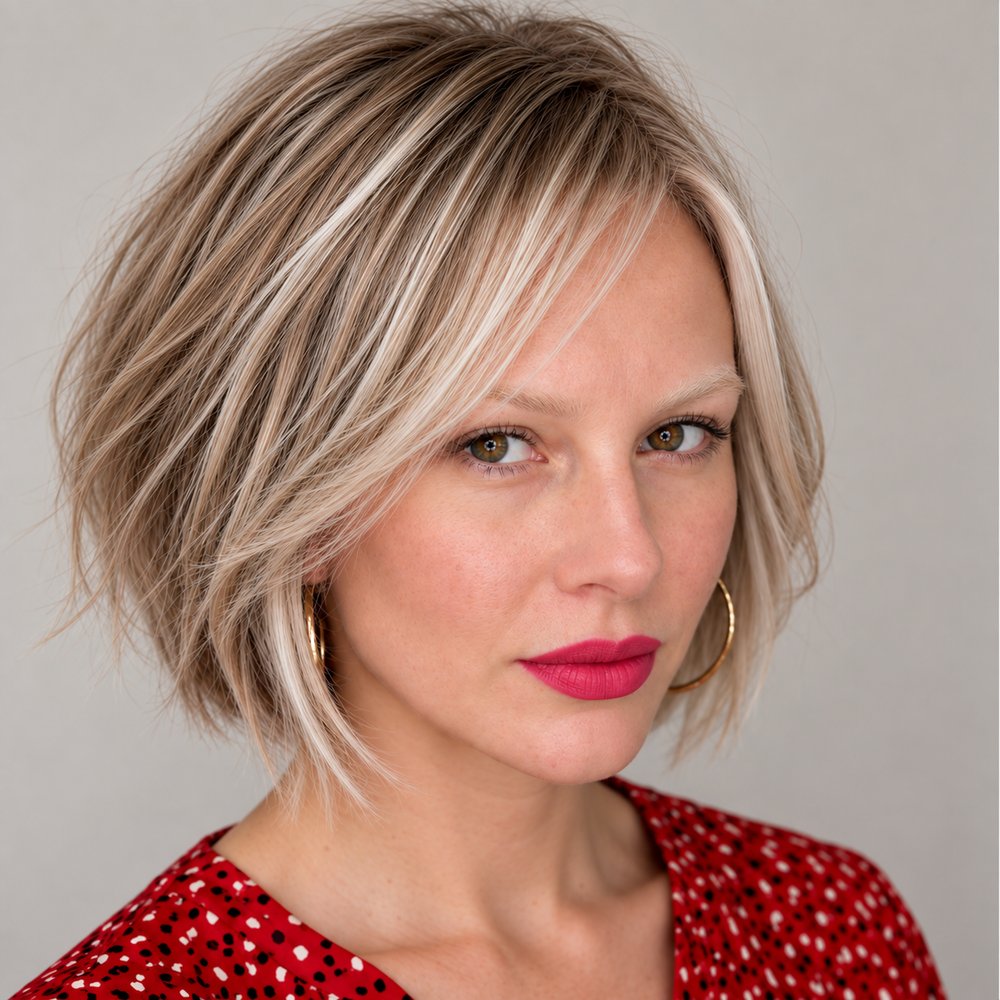
Veronica Formos is a multidisciplinary artist currently based in Vancouver, originally from Ukraine. Working across painting, photography, and digital media, her practice moves through different stages of image-making — from physical surface to fully constructed realities. Her work has been exhibited internationally, collected worldwide, and featured in over 50 publications.
Her work explores the instability of perception and the shifting boundary between the human body and its representation. Rather than documenting emotion directly, she reconstructs it through distortion, fragmentation, and visual tension. Faces dissolve, bodies become structures, and identity is treated as something fluid, fragile, and often artificial.
While her earlier works include oil and acrylic painting, collage, and experimental photography, her current focus is primarily on digital art. In these works, the human form is reimagined as an object — assembled, altered, and sometimes stripped of individuality altogether.
Her practice reflects on a contemporary visual culture where images no longer represent reality, but begin to replace it.
ARTIST’S STATEMENT
My work exists somewhere between image and memory, beauty and discomfort, the real and the constructed. I am interested in the unstable moment when something familiar begins to feel slightly wrong: a body becoming an object, a photograph becoming a dream, a beautiful image revealing something unsettling beneath its surface. Much of my work is concerned with identity, transformation, memory, desire, and the quiet violence of expectation.
I am a self-taught artist working across photography, painting, digital art, experimental video. My background in photography and film has shaped the way I think about images not simply as objects, but as scenes, fragments, and cinematic moments.
My works often begin with an emotion, a contradiction, or an image that does not yet have a logical explanation. I build fictional worlds where the human body can merge with architecture, clothing can become a second anatomy, nature can become artificial, and memory can take physical form. These worlds are deliberately beautiful, but never entirely safe. I want the viewer to recognize something before realizing that it has shifted.
For me, the image is not an answer. It is a place where questions can remain unresolved. I am interested in that space between recognition and uncertainty, where the viewer is no longer sure whether they are looking at a memory, a fantasy, a constructed identity, or something that could have existed.